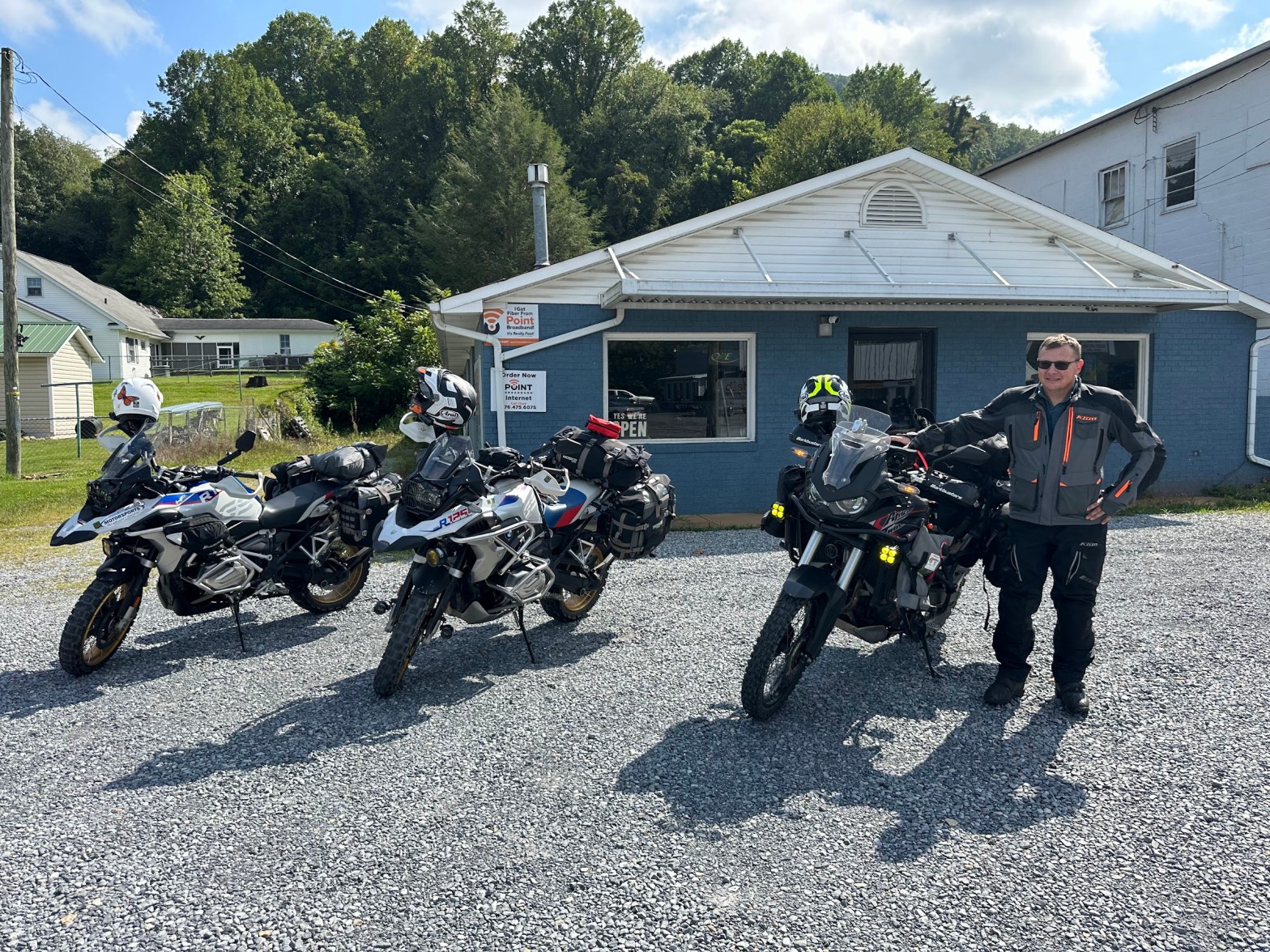
We had to postpone this trip several times for various reasons, so we were very excited to finally hit the road in a rented U-Haul on September 15, 2023.
What is MABDR?
MABDR is one of a growing number of routes put together by the wonderful folks at Backcountry Discovery Routes (BDR). Mid Atlantic BDR is a 1,000+ mile route through remote parts of Virginia, West Virginia, Maryland, and Pennsylvania. We are grateful to everyone that put it together and to all the volunteers that keep the route in good shape. A documentary about the route is available on YouTube.
Getting There
Living in the Boston area and having demanding full time jobs, our team of three had limited time for this adventure, but we were determined to do the entire MABDR in the shortest time possible. Of course, we didn’t want to just fly through the trails, we really wanted to enjoy nature and unique landscapes. Our goal was to minimize the time getting to the start of this BDR and then back home from its end point. The best solution was to drive a rental truck with the bikes to the starting point, get on the bikes there, and ride the BDR and the return route to our homes.

We loaded bikes the day before we left. It took us 3 hours to make sure that every bike was safe and secure. Kestas, one of the riders, designed a special front wheel chock for each bike – it really helped. Feel free to email me for full specs and drawings.
A 20′ U-Haul truck comfortably fit two BMW R 1250 GSs and a Honda Africa Twin. And it still had enough space left for another large adventure bike.
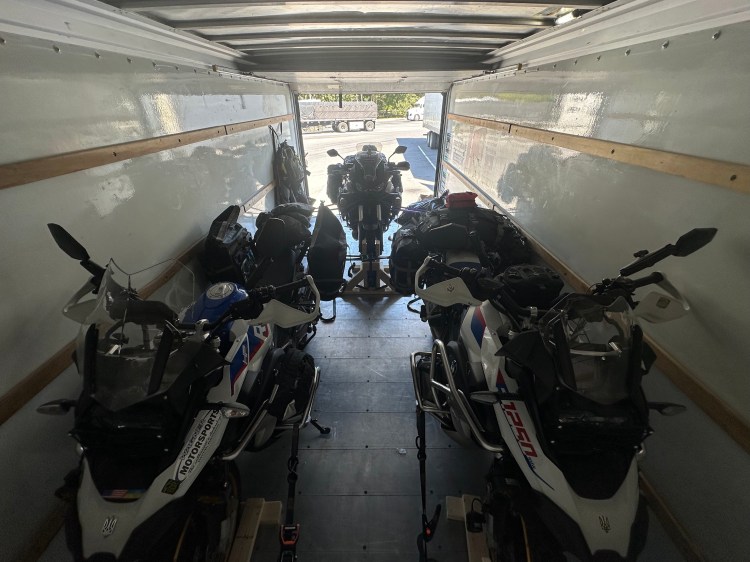
The nearest point to the start of the MABDR to drop the U-Haul was in Blacksburg, VA. It was a 700 mile drive that we did in around 13 hours. They tell you that you cannot drive over 55 mph, and we definitely complied with that – you can check the math.

The three of us had a cozy ride in the U-Haul cabin. It’s tight, even for our average size bodies. But with three drivers, we ran the truck practically non-stop from 4am until 6pm. It took us 17 minutes to unload and 40 minutes to get to the first night’s stop. And this is where our lessons started.
I’m not going to waste your time on my own descriptions of all the breathtaking scenery and views. This route has been well documented and described by many riders, starting with the BDR team itself.
One of the frequently searched topics for MABDR is water crossings. There are several of them in section three. In September, they did not represent any problems as they were rather shallow. However, because of recent heavy rains, some of the turns high in the mountains accumulated enough water. Those are not see-through and located in more challenging landscape, frequently in clay surfaces. So we kiddingly called those water crossings as well.
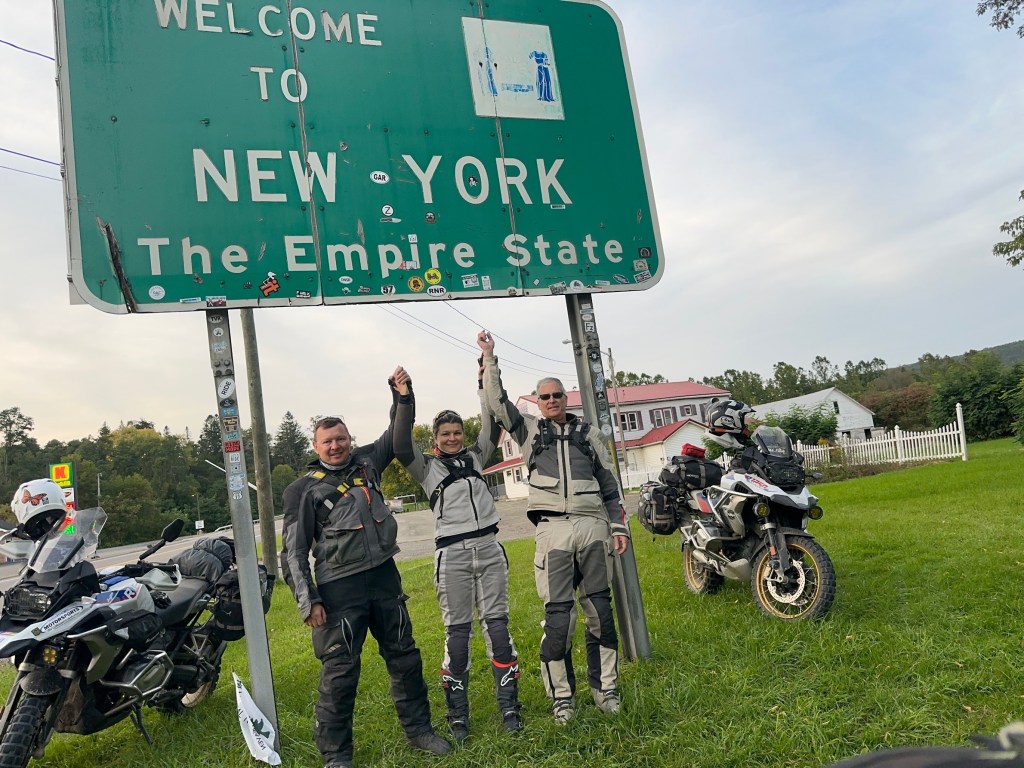
We finished the MABDR on the evening of September 22. By 4pm of the next day, all of us were home. We rode slightly more than 380 miles on a rainy day on highways. So the entire trip took us 9 days, including getting to and back from the route.
Lessons learned from our trip:
- A detour sign in that area of the country can mean many things. It can mean long additional mileage and lack of signs where it ends. Be ready to hit the dirt to complete the detour.
- If you are using GPS to get to any point in that area, and your GPS is set up for “curvy roads”, you may ride a good portion over dirt roads. And those roads can be more challenging than most of the MABDR itself. On the morning of day four, we were about to start section 4 and I plotted the route from the campground to the nearest point on the BDR. The GPS happily planned a 6-mile route. We went through challenging unmaintained roads and came to the BDR in the promised 6 miles. No part of the BDR we rode that day was as difficult as that approach.
- If you don’t regularly jump between a fully loaded and an empty bike for local rides, you will need some time to get used to your “new” heavier bike. Just be patient with this and recognize the difference. Regardless of how well you try to balance the weight, the bike will feel different for a while.
- For shorter riders, you will find cowboy mount very helpful for these trails. So practice it while at home.
- Plan for broader temperature ranges with your gear. One of our riders prepared full weather forecasts for all days of riding. I saw the ~70F highs and brought mesh gear, but it didn’t reach those temps often. I also failed to see that those reports showed much cooler periods. So, riding at ~55F in my mesh gear was a challenge. I had other layers to add, but wished I had brought other gear.
- You might need to adjust the camping gear for low temperatures. Hank’s sleeping bag pad didn’t have enough insulation for the nights when it dipped below 50F.
- You should add all of the campsites to the routes (via Basecamp) before copying them to our GPSs. I had thought we would see more signs for them, but without cell service, it was hard to find good sites on some nights.
Plan better for tire wear. I made a conscious decision to bring the bike with less than 50% tread remaining to my TKC80’s. By the end of day four, my tires were practically bald. This added excitement to the final run home from western NY to Boston. We ran 380 miles in the rain and low 60s. Not the safest or smartest thing.

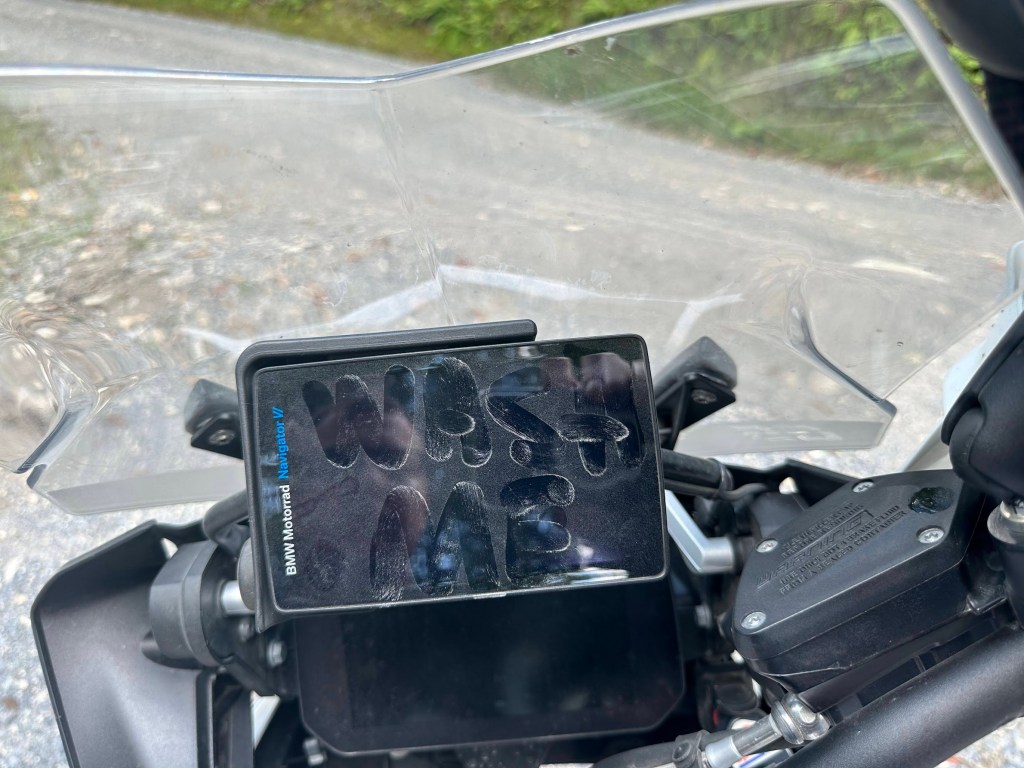
Consider bringing goggles when riding in a group. The amount of dust was more than expected. I rode with my shield mostly closed, but the dust still bothered my eyes and breathing. I also wished for a filtered mask as breathing in the dust was not fun at all.
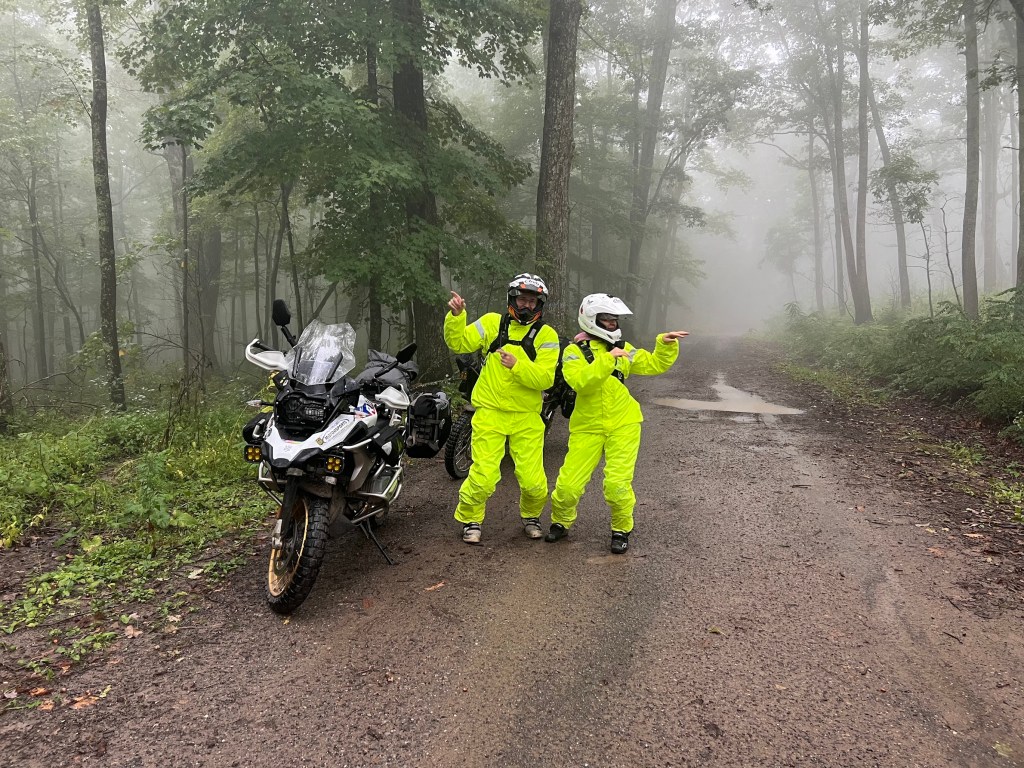
Bring your smile. The trails are amazing. Day 2 / section 2 was fully raining and foggy. To the point where we couldn’t see farther than 30 yards or less. It was my favorite day. It was challenging riding and such a rewarding experience. And yes, remember to bring a pair of waterproof gloves.

- We stopped to eat dinner one night at Forest House Hotel because honestly we were tired of heating up the freeze-dried food most of the evenings. What we did not know was that on Thursdays they have a karaoke night. After spending 4 days in the quiet of the forests it was a shock to the senses. But gosh, those people can sing! So if you are into karaoke and find yourself in that area, you may have extra fun on a Thursday night.
 LanaOnWheels
Hi Lana – I’m curious about the protection installed on your bike. You seem to have a Touratech crash bar + cylinder head guards installed. How effective was this offroad? I am looking at the same but wanted to hear about your real world experience. I am also doing more offroad but I’m worried about the Touratech crash bar design – it is very open will it sustain damage to the cylinder heads easily?
LikeLiked by 2 people
As you said, I have lower bars and head guards. This is a specific combination I wanted to protect the engine from most of the possible hits. Touratech bars are great because they absorb the impact without passing it to the body of the bike. They give in a bit, and ultimately you need to change them. This is a consumable part. Head guards are designed to have extra space between them and the actual head, also providing for extra cushion in case something goes between the open part of the lower bar. I’m very happy with this combination of engine protection. I did not have any issues with it on this trip or anywhere else.
LikeLike